





YOU HAVE NO ITEMS IN YOUR CART.

1391 E Boone Industrial Blvd
Columbia, MO 65202
(718) 210-3913

Featured Brands
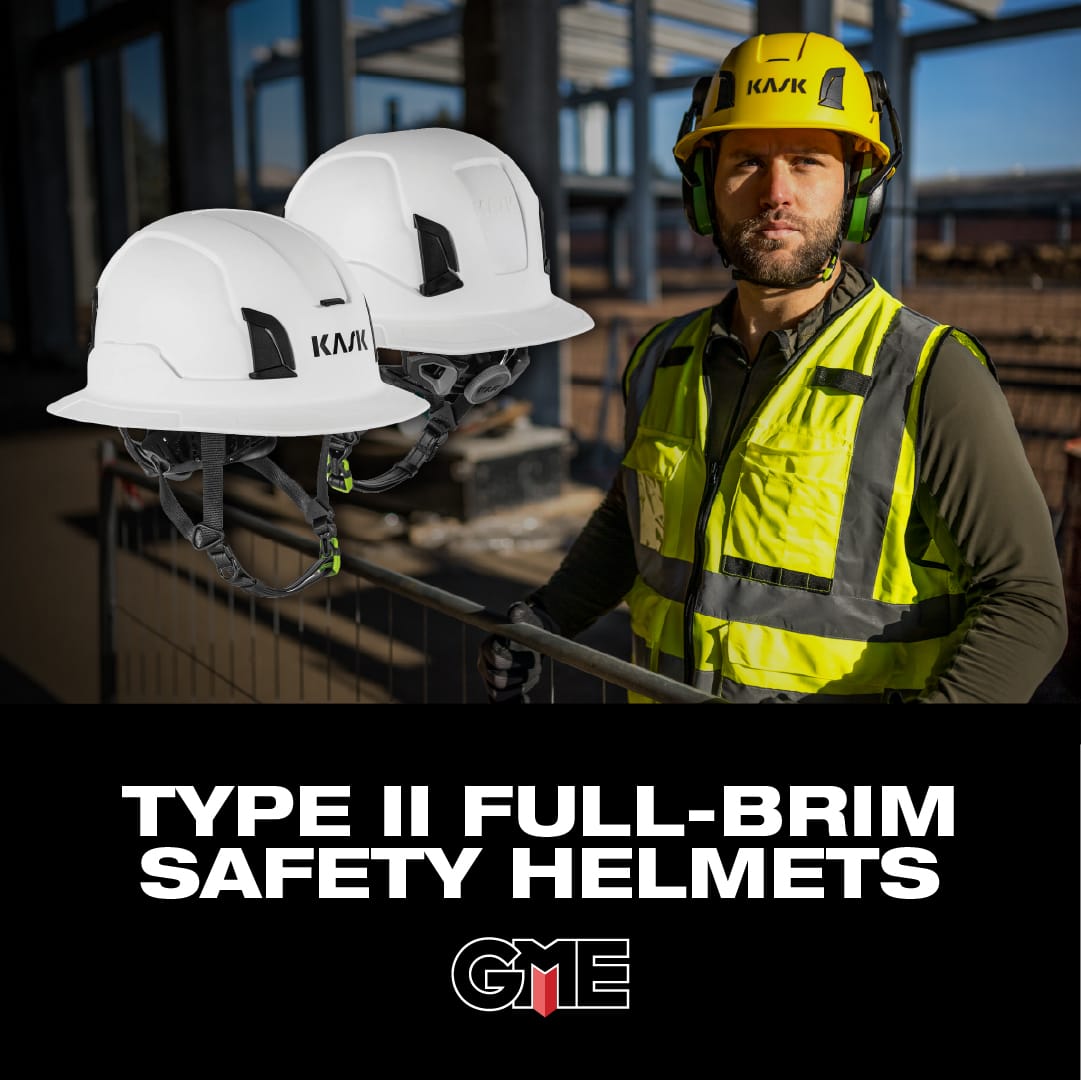
Safety Stand-Down Week 2026: 360 Degrees of Safety
Type II Helmets
Every year, falls from elevation are the leading cause of death for construction and at-height employees. Safety Stand-Down Week - created by OSHA, was established to raise fall hazard awareness across the U.S. in an effort to stop fall fatalities and injuries.
For day four of Safety Stand-Down Week, we're focusing on type II helmets and why having 360-degree protection is an important part of your fall protection setup.
For decades, the full-brim hard hat has been the visual icon of the American trades. Its silhouette is classic, providing essential shade and shedding rain away from the neck. However, as jobsite safety evolves, we are seeing a fundamental shift in how we define "protection." It’s no longer just about what falls from above; it’s about protecting the worker from every possible angle. Here is why all-sides protection is becoming the non-negotiable standard for modern crews.
Beyond the Crown: Understanding Type II Protection
Most traditional hard hats are ANSI Type I rated—meaning they are designed solely to protect the top of the head from falling objects. While effective for vertical impacts, they offer little defense if a worker slips, trips, or is struck from the side. Modern safety professionals are increasingly moving toward Type II Protection, which safeguards against:
- Frontal Impacts: Direct hits to the forehead area.
- Side (Lateral) Impacts: Protection during side-swipes or swinging loads.
- Rear Impacts: Crucial for protecting the base of the skull during a backward fall.
The Innovation of the "Adaptive" Brim
One of the biggest complaints with traditional full-brim helmets has always been their rigidity. In tight quarters, a stiff brim can catch on a stud or pipe, jarring the neck or knocking the helmet off entirely. The industry is solving this through Adaptive Brim Technology. By integrating flexible, high-durability materials into the brim, manufacturers have created a helmet that:
- Flexes on Impact: Instead of the helmet shifting over your eyes when you bump a joist, the brim gives way and snaps back.
- Reduces Rotational Force: In a fall, a flexible brim is less likely to act as a lever against the neck, potentially reducing the risk of strain or concussion.
- Resists the Elements: High-performance polymers now ensure these brims don't become brittle in sub-zero temps or lose their shape in the summer heat.
Advanced Energy Management: The Inner Tech
The "all-sides" approach requires more than just a plastic shell. To meet higher safety ratings, the interior architecture of the helmet has been redesigned.
- Dual-Density Cores: Many high-end helmets now feature a two-part system—a low-density core for top impacts and a high-density outer layer specifically engineered for lateral (side) energy absorption.
- Rotational Testing: Modern helmets are often subjected to "off-axis" impact testing, ensuring the brain is protected from the shearing forces that occur during angled hits.
- Sustainable Materials: Safety is also becoming "greener." The latest internal shells often utilize recycled EPS (expanded polystyrene), proving that high-level protection and environmental responsibility can coexist.
Comfort That Drives Compliance
A helmet only works if the crew actually wears it. The shift toward all-around protection has brought a wave of ergonomic upgrades:
- Moisture-Wicking Liners: Utilizing advanced fabrics and silver-ion treatments to manage sweat and eliminate odors.
- Precision Fit: Multi-point adjustment systems and easy-to-use dials (even with gloves) ensure the helmet stays centered and secure during movement.
- Accessory Ecosystems: Modern helmets act as a platform. With "Easy Click" systems, workers can snap on visors, earmuffs, and headlamps without compromising the integrity of the brim or the shell.
The Verdict: A New Era of Head Protection
The classic full-brim look isn't going anywhere, but the technology inside has changed forever. By choosing equipment that prioritizes all-sides protection, you aren't just following a trend—you’re investing in the highest level of defense available for the modern jobsite.
Safety Reminder: Always verify that your head protection meets the specific ANSI/ISEA Z89.1 Type II requirements for your site. Proper training and adherence to manufacturer instructions are essential for any piece of PPE.
Safety Spotlight
Questions or Need More Info?
If you have any questions regarding the above information or need more insight into safety or fall protection in general, reach out to our Gear Experts®! Click here to contact our team, or use the instant chat feature in the lower right hand corner of your browser screen. Also be sure to connect with us on social media to keep up with all of our latest content.
***The content of this page is not intended to replace proper, in-depth training. Manufacturer’s instructions must also be followed and reviewed before any equipment is used.